

Who Is The Founder Of Ebonyi State? The History Explained

Ebonyi State, created on October 1, 1996, by the military government of General Sani Abacha, is one of Nigeria’s youngest states. Before its creation, the area was part of Enugu and Abia States, and many communities felt neglected.
People from the old Ogoja Province, especially in Abakaliki and Afikpo, had long pushed for a state of their own to meet their development needs. However, the creation of Ebonyi brought political recognition and cultural unity with Abakaliki as the state capital.
READ ALSO: Mary Slessor: The Missionary Who Stopped The Killing Of Twins In Nigeria
When And How Was Ebonyi State Created?
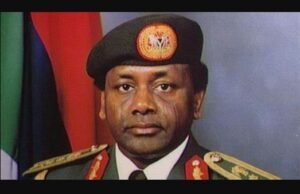
Ebonyi State was officially created on October 1, 1996, by the military government of General Sani Abacha. Before it became a state, the areas that make up today’s Ebonyi were split between Enugu State and Abia State.
These included the Abakaliki Division from Enugu and the Afikpo Division from Abia. Many people from these areas felt ignored and underrepresented in the former states. The demand for a new state had been going on for years.
People from the old Ogoja Province, especially those in Abakaliki, Afikpo, and Obubara, pushed for a place where their voices could be heard and their needs met.
They wanted a state that would reflect their Igbo heritage and bring together communities with a shared culture. They believed that having their state would lead to better roads, schools, hospitals, and leadership that understood their challenges.
When General Abacha finally responded to these calls, the announcement was made on Nigeria’s Independence Day, making it a very symbolic moment for the people.
With this, Nigeria’s total number of states increased from 30 to 36. Ebonyi State was born through a military decree that gave it full status as part of the Nigerian federation.
Abakaliki was chosen as the state capital because it had been a key administrative and trade center for many years. This made it a natural choice to lead the new state.
READ ALSO: How Many LGAs Are In Nigeria? The Complete 774 Local Government List
Historical Background Before Ebonyi State’s Creation
The history of Ebonyi State’s land goes back to 1891 when the British colonial government brought together different villages and communities to form administrative areas like Abakaliki, Afikpo, and Obubra.
These areas became part of the Ogoja Province, which the British created to help them rule southeastern Nigeria more easily.
Ogoja Province, with its capital in Igoli (now Ogoja town), was considered a difficult and less developed area by the colonial rulers.
It had rough terrain, poor roads, and a low population, which led the British to call it the “Lost Province” or “the pioneer fringe.”
As a result, the area did not get much attention or investment compared to other parts of the southeast. Still, the people living there built strong local economies. Farming was their main activity.
They grew crops like yams, rice, cocoa, and palm produce. They also made salt, pottery, and cloth to support trade and culture in the region.
The British used a system called Native Authorities from 1933 to manage the area. By 1945, there were around 169 of these local authorities.
They are collecting taxes, enforcing laws, and developing communities. But sometimes, the British ignored real traditional leaders and gave power to less experienced individuals, causing conflict and forcing people to work on road and school projects.
After Nigeria gained independence in 1960, the Ogoja Province was divided. Its areas were added to Enugu and Abia States when Nigeria created more states in 1976 and 1991.
This broke up the communities of the old Abakaliki area and made them feel left out and underdeveloped. With time, this led to calls for their own state, a place that would unite them and focus on their development, which eventually led to the creation of Ebonyi State.
READ ALSO: 5 Best Nigerian Presidents In History
How Old Is Ebonyi State Now?
As of June 13, 2025, Ebonyi State is 28 years old. It was created on October 1, 1996, by the federal military government under General Sani Abacha, from parts of Enugu State and Abia State.
Who Was The First Governor Of Ebonyi State?
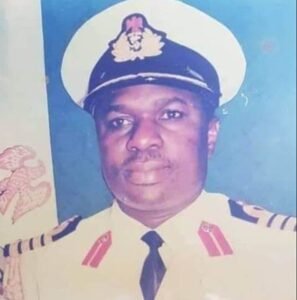
The first governor of Ebonyi State was Navy Commander (retired) Walter Feghabo. He served as the state’s first Military Administrator from October 7, 1996, to August 1998.
Ebonyi State was newly created during that time, formed from parts of Enugu State and Abia State under the military regime of General Sani Abacha.
Because it was a military government, the head of the state was referred to as a Military Administrator rather than an elected governor. Walter Feghabo was appointed to lead Ebonyi State right from its creation.
During his time in office, he was responsible for starting many of the basic government operations, especially since the state was just starting out and needed direction and order.
Feghabo was born on August 15, 1956, in Warri, Delta State, Nigeria. He grew up in Warri and attended both primary and secondary schools in the city. As a trained officer in the Nigerian Navy, he served his country in both military and administrative capacities.
After his time in Ebonyi, Feghabo was transferred to Delta State in August 1998, where he served as the Military Administrator during the short transitional government led by General Abdulsalami Abubakar.
He later handed over power to the democratically elected civilian governor, James Ibori, on May 29, 1999. In June 1999, after Nigeria returned to civilian rule, the federal government retired all former military administrators from public service. Walter Feghabo was among those retired officials.

