
Top 10 Yoruba Musicians (2025 Ranking)

This guide ranks the top ten Yoruba musicians across genres like juju, Afrobeat, fuji, and waka, highlighting the richness of Yoruba traditions and their impact on Nigerian and global music.
- King Sunny Ade
- Fela Kuti
- Ebenezer Obey
- Orlando Owoh
- I.K. Dairo
- Haruna Ishola
- Sikiru Ayinde Barrister
8. Shina Peters
9. Salawa Abeni
10. Lagbaja
READ ALSO: Top 10 Igbo Musicians (2025 Ranking)
1. King Sunny Ade
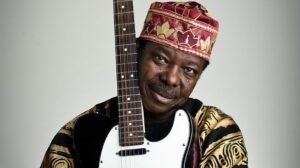
King Sunny Adé is one of the most influential Yoruba musicians in history. He began his music career in Lagos after leaving grammar school in Ondo.
Starting with the highlife band Federal Rhythm Dandies, he later formed his band, evolving from The Green Spots to African Beats and Golden Mercury.
He pioneered modern juju music by combining talking drums, electric guitars, poetic lyrics, and traditional chants. Adé introduced instruments like the pedal steel guitar and synthesizers to Nigerian music.
In 1982, his album Juju Music launched him onto the global stage, earning praise from The New York Times and Record. He became the first Nigerian Grammy nominee and was later nominated a second time.
Aside from music, he’s a professor, entrepreneur, and cultural ambassador. Sunny Adé has worked with artists like Stevie Wonder and was inducted into multiple halls of fame.
2. Fela Kuti
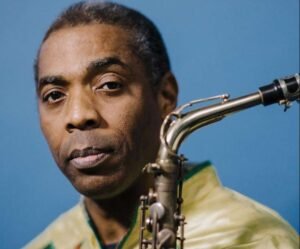
Fela Kuti remains the most iconic Yoruba musician in history. He created Afrobeat, a mix of jazz, funk, highlife, and traditional Yoruba rhythms.
This sound was powerful, political, and African. His longtime drummer, Tony Allen, helped influence this unique style with rhythms that defied Western norms.
Fela’s music was known for its long instrumental intros, call-and-response vocals, and sharp political lyrics, sung in Pidgin English. He used sax, keyboards, trumpet, and guitar to deliver raw messages about injustice and freedom.
His concerts were theatrical, filled with energy, color, and bold statements. Female dancers known as “Queens” added life and controversy to his shows.
Fela didn’t just entertain, he educated, resisted, and provoked through sound. His legacy built the foundation for generations of Yoruba artists to merge music with meaning, making him a pioneer not just in Nigeria but across the world.
3. Ebenezer Obey
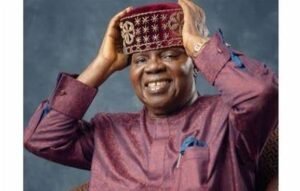
Ebenezer Obey, born on April 3, 1942, in Idogo, Ogun State, is one of the most legendary figures in Yoruba music. Known widely as “Chief Commander,” he began his career in the 1950s after moving to Lagos.
He trained under highlife legend Fatai Rolling-Dollar before forming his band, The International Brothers, in 1964. This group later became the Inter-Reformers Band, famous for mixing jùjú rhythms with meaningful Yoruba proverbs.
Obey’s music praises both God and people, celebrating Nigerian elites while integrating spiritual messages. In the early 1990s, he changed towards gospel music, where he’s still active today.
He married Juliana Olaide Olufade in 1963. She passed away in 2011 at age 67. They had children and grandchildren. Now in his 80s, Obey continues to inspire generations with his music and message.
READ ALSO: Who Is The Father Of The Igbo People?
4. Orlando Owoh

Orlando Owoh, born Stephen Oladipupo Olaore Owomoyela on February 14, 1932, in Osogbo, Nigeria, was a famous Yoruba highlife musician.
Though he began his career as a carpenter, he was drawn to music in the late 1950s when he joined the Kola Ogunmola Theatre Group as a drummer and singer. In 1960, he founded the Omimah Band, later growing into the Young Kenneries and African Kenneries International.
Over 40 years, Owoh released more than 45 albums and became a household name, even as musical tastes changed toward jùjú and fuji. Known for his raw voice and Yoruba lyrics, he was still relevant till his passing on November 4, 2008.
5. I.K. Dairo
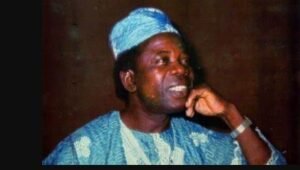
I.K. Dairo was a pioneer of jùjú music and one of the most influential Yoruba musicians of the 20th century. He founded the Morning Star Orchestra in 1957, later renamed the Blue Spots. He rose to prominence in 1960 during Nigeria’s independence celebrations, where his performance earned him the admiration of many Yoruba elites.
Dairo stood out for combining traditional Yoruba rhythms with Latin sounds and Christian choral styles. He also sang in several Nigerian languages, including Yoruba, Edo, and Hausa. His use of the accordion, rare in jùjú music, set him apart from others.
His hit songs like Salome and Ka Sora carried strong cultural and political messages. Although musicians like Ebenezer Obey and King Sunny Adé later took the spotlight, Dairo continued to perform, touring across Europe and North America throughout the 1970s and 1980s. He supported artists’ rights and even taught in the U.S aside from music.
6. Haruna Ishola
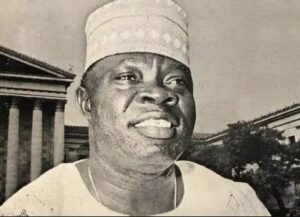
Haruna Ishola, born in Ibadan, is regarded as the father of Apala music in Nigeria, having begun recording in the late 1940s, using only traditional instruments like agogo bells, akuba drums, shekere, and the agidigbo, a thumb piano for Apala’s hypnotic sound.
His early albums didn’t sell well, but relentless touring made him a favorite at elite Nigerian parties. A re-recorded tribute album in 1955 was the turning point in his career, earning him recognition across Nigeria.
In 1969, he co-founded STAR Records with juju legend I.K. Dairo, making it the first African record label owned by artists. Two years later, his album Oroki Social Club sold over five million copies. Known for his powerful voice and cultural pride, Ishola never used Western instruments.
He toured Europe and West Africa, performing for hours to sold-out crowds. He died in 1982, and his son Musiliu Haruna Ishola now carries on his legacy.
READ ALSO: How Many LGAs Are In Nigeria? The Complete 774 Local Government List
7. Sikiru Ayinde Barrister
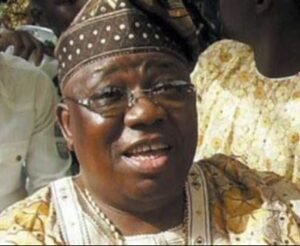
Sikiru Ayinde Barrister was a pioneer of Fuji music in Nigeria. His early days in music saw him performing as an ajiwere singer during Ramadan, followed by military service in the Nigerian Civil War.
After the war, he left the army to pursue music full-time and formed a 34-member band called the Supreme Fuji Commanders. His first LP came out in 1966. He later released albums like Bisimilahi (1977), Iwa (1982), Fuji Garbage (1988), and Reality (2004).
His music fused traditional Yoruba genres like Apala and Sakara. Barrister had successful shows in London and earned national recognition.
In 2006, President Obasanjo awarded him the MFR honour. He also received an honorary PhD in music from City University, Los Angeles, in 1983.
8. Shina Peters
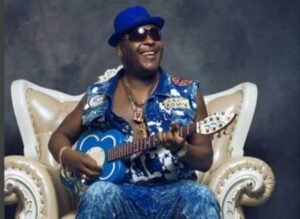
Sir Shina Peters is one of Nigeria’s most influential Juju musicians. Born in Ogun State in 1958, he started his musical career early, performing with friends in a local band.
He later joined Ebenezer Obey’s band before moving to play guitar for General Prince Adekunle. With time, he developed his sound, a mix of Juju and Afrobeat, known as Afro-Juju.
In 1989, Peters released Ace (Afro-Juju Series 1) with his band, Sir Shina Peters & His International Stars. The album, produced by Laolu Akins, became a massive hit and went double platinum, earning him several music awards.
He followed it with Shinamania. In total, Sir Shina Peters has released 16 albums. Aside from music, he also acted in films and fathered renowned music video director Clarence Peters.
9. Salawa Abeni

Salawa Abeni is a legendary Yoruba musician known for her pioneering role in waka music, a traditional, Islamic-influenced Yoruba genre. She rose to fame in 1976 with her debut album Late General Murtala Ramat Mohammed. It became the first album by a female Yoruba artist to sell over a million copies in Nigeria.
She recorded with Leader Records until 1986 before moving to Kollington Ayinla’s label, where she stayed until 1994. In 1992, she was honored with the title “Queen of Waka Music” by the Alaafin of Oyo, Oba Lamidi Adeyemi. Waka music predates both fuji and jùjú, and Abeni helped bring it to a broader audience.
READ ALSO: How Many States Of Emergency Have Been Declared In Nigeria?
10. Lagbaja

Lágbájá, born Bisade Ologunde in Lagos in 1960, is a Nigerian Afrobeat musician known for his signature mask and powerful messages. His name means “anonymous” in Yoruba, symbolizing the voice of the common man. He began performing in the early 1990s and formed his first band in 1991 after teaching himself to play the saxophone.
His music mixes Afrobeat with rich percussion, including congas and talking drums. His lyrics call for social change, unity, and honesty in politics. One of his most powerful works, We Before Me (2000), challenged politicians and called for national brotherhood.
Lágbájá performed with backup singer Ego Ihenacho, mixing soulful vocals with jazz-like saxophone lines. His sound draws comparisons to jazz legends like John Coltrane. In 2006, he won Best Male Video at the Channel O Music Video Awards for “Never Far Away.”